
The U.S Patent Office Has Decided How To Handle AI
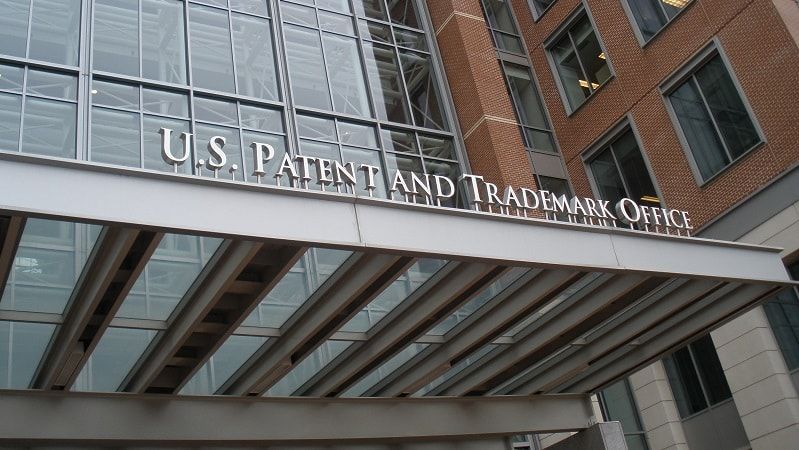
After months of deliberation the United States Patent and Trademark Office has returned its verdict on an important question, “Who owns the patent to inventions created by AI?”
In December of 2019 I weighed in via a detailed response to the USPTO’s public notice, and in a blog post outlining my position. I am happy to report that in late April the USPTO ultimately ruled that, “under current law, only natural persons may be named as an inventor in a patent application.”
I wholeheartedly agree with their position, but there are those that aren’t completely satisfied by the decision. That includes the organization that kicked off the debate at the USPTO in the first place.
It all began when Stephen Thaler, the CEO of AI and artificial neural network organization Imagination Engines, credited his machine intelligence platform, named Dabus, for a pair of new inventions; a warning light and a food container. In August a team of lawyers working as part of the Artificial Inventor Project wanted to put current patent laws to the test, and filed a patent that listed Dabus AI as the inventor.
According to a recent article in the MIT Technology Review, Thaler says he spent a decade building Dabus, but has no expertise in creating lights or food containers, and would not have generated those patentable ideas on his own. Therefore the legal team argues that Dabus should be credited as the rightful inventor of the patent.
Patent attorney and AI Project member Ryan Abbott points to IBM’s Watson as an example. He tells the Technology Review that there might be hundreds or thousands of people involved in programming the supercomputer’s general problem solving capabilities, but “if Watson then applies those capabilities and solves a particular problem in a way that results in a patent, it’s not clear that anything any of those people have done qualifies them to be an inventor.”
He fears that if the AI program cannot be listed as the inventor, and humans would not or could not have come up with the inventions on their own and therefore can’t be credited either, than it might render the invention un-patentable, and thus discourage innovation.
I wholeheartedly disagree with that characterization—and ultimately the USPTO did too—because allowing AI to hold a patent would open up a floodgate of problems, and in my opinion would pose a much greater threat to innovation.
For example, how could AI license out the patent? Presumably the creator of the software would have that authority, but technically the patent holder needs to give legal consent. Since that isn’t something an algorithm is able to do, the invention couldn’t be utilized by anyone until the patent expired, which would certainly be far more detrimental to innovation. And what if someone infringed on the AI’s patent rights? Can it pursue a lawsuit? I’m not sure how to answer that, and I don’t think the USPTO does either.
Furthermore, the idea that it would be too difficult to credit thousands of people contributing to the same patentable idea is bogus, because it already happens today.
Think about Intel’s CPU processors; a single person could never design something so complex on their own. Each new generation of processor builds on years of progress, and requires input from countless individuals. In this case Intel, as an organization, owns the patent, but each new iteration attributes the innovation to both the team that is responsible for the upgrade as well as those responsible for previous iterations.
Where I do agree with Thaler, Dabus and the Artificial Inventor Project is in the fact that it is important to credit the system or machine that came up with the idea in some shape or form, but I draw the line at awarding a patent to a computer program.
In my opinion, both need to be credited as having contributed to the final product, but only humans should be able to own the patent, as ruled by the USPTO. An important reason why patents exist is for others to understand and replicate an invention based on how it was originally created. Whether you give all the credit to an automated system or none, you’re not telling the whole story of how that thing came to be, and that information is important for future researchers and inventors. Leaving out the human names only tells half the story, as does failing to include the system or machine that also contributed to the invention.
As a software engineer myself for over 20 years, the most important question for me is whether those who view the patent in the future will have access to enough information to deconstruct and further understand the innovation.
As I argued in my previous blog post, and in the opinion I sent to the USPTO, a patent should belong to the person or persons who utilize the tool to arrive at a unique finished product, rather than to the tool itself. At the same time its important to acknowledge that the tool was used in the creation process, otherwise it could never be fully understood.