
AI inventory and orchestration, purpose-built for regulated industries.
One place to see every AI tool running in your business, from the models your own teams build to the AI from your vendors. Everything runs in your cloud, and each tool arrives with a risk level, a plain description of what it does, and someone's name on it.
Book a free consultation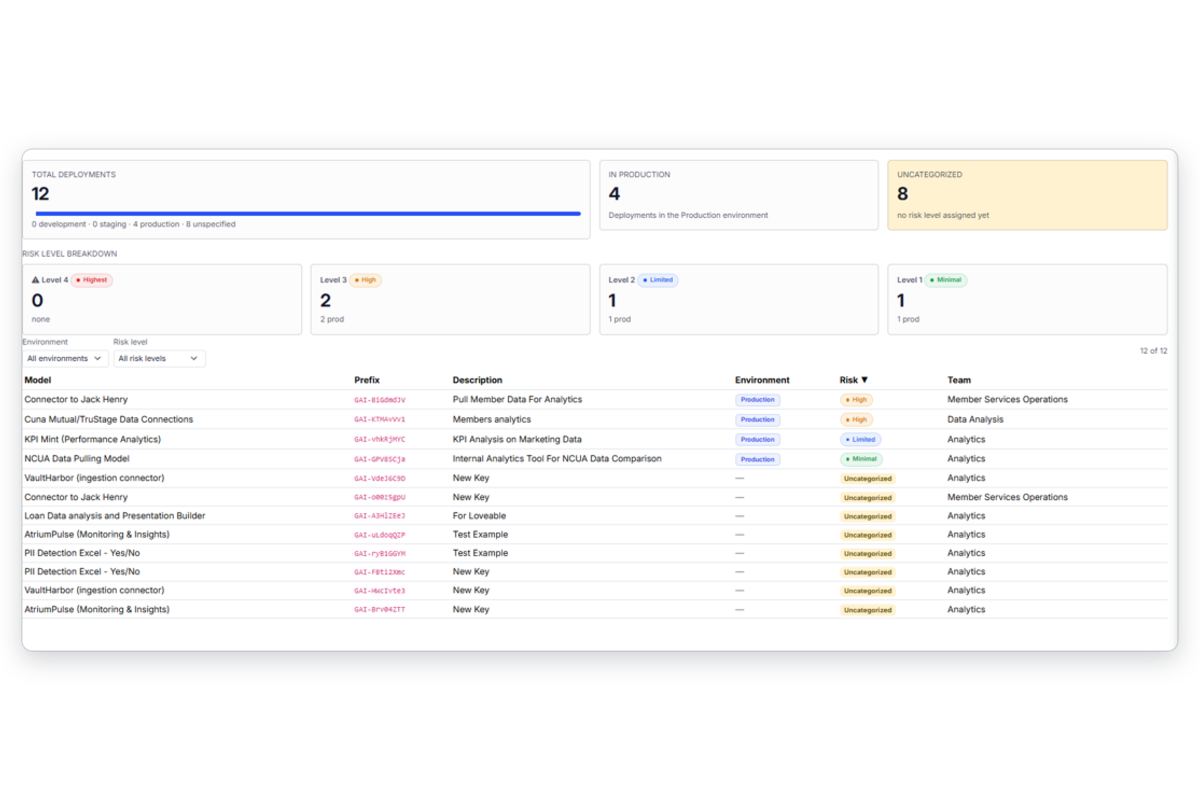
Trusted by 50,000+ developers and enterprises:















You can't separate AI Deployment/creation from governance.
| What it is | Where it came from | Why it's not on your list |
|---|---|---|
| A scoring model inside a vendor tool | Bought, not built | It arrived as a product feature |
| AI inside your core platform | Came with the platform | Nobody chose it separately |
| A meeting notetaker | A team signed up on their own | Nobody called it a model |
| A document extraction script | Written in a sprint | It was a script, until it wasn't |
| A drafting assistant built in a chat window | Somebody's good afternoon | It never touched IT |
| A resume screening tool | Bought as a recruiting feature | HR bought it, not technology |
| A model inherited in an acquisition | Came with the company | It was never on anyone's list |
| A classifier a consultant left behind | The project ended | The owner left with the invoice |
Every one of these is AI making or shaping a decision in your business. An examiner, an auditor, or a customer asking what happened does not care which of them you built.
Each AI tool has built in governance.
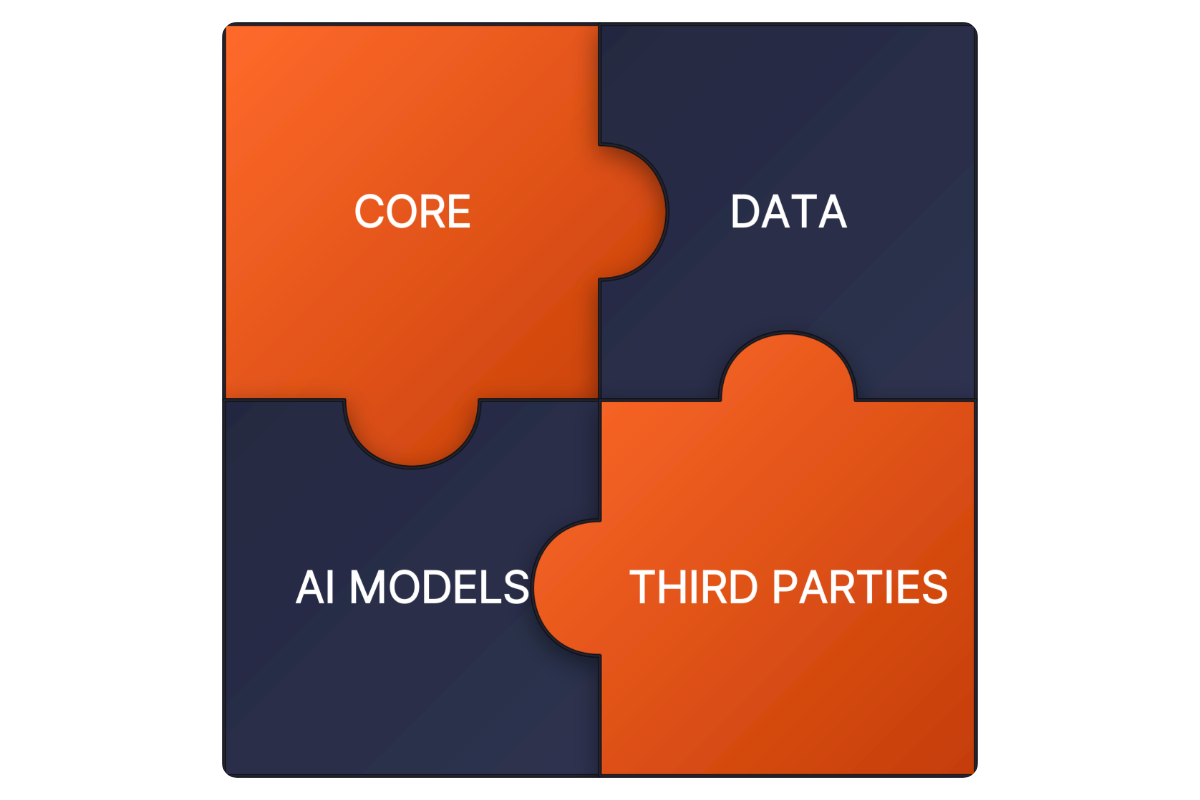
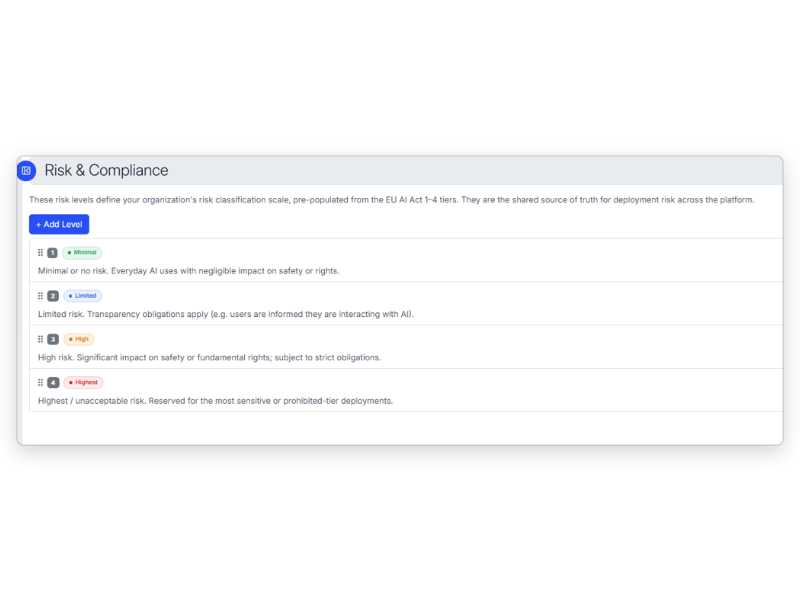
gravityAI is where your teams build and run AI: the models they write, the connections to your data, the AI you license from vendors, and the workflows built on top of it. It all runs inside your own cloud, on your own systems.
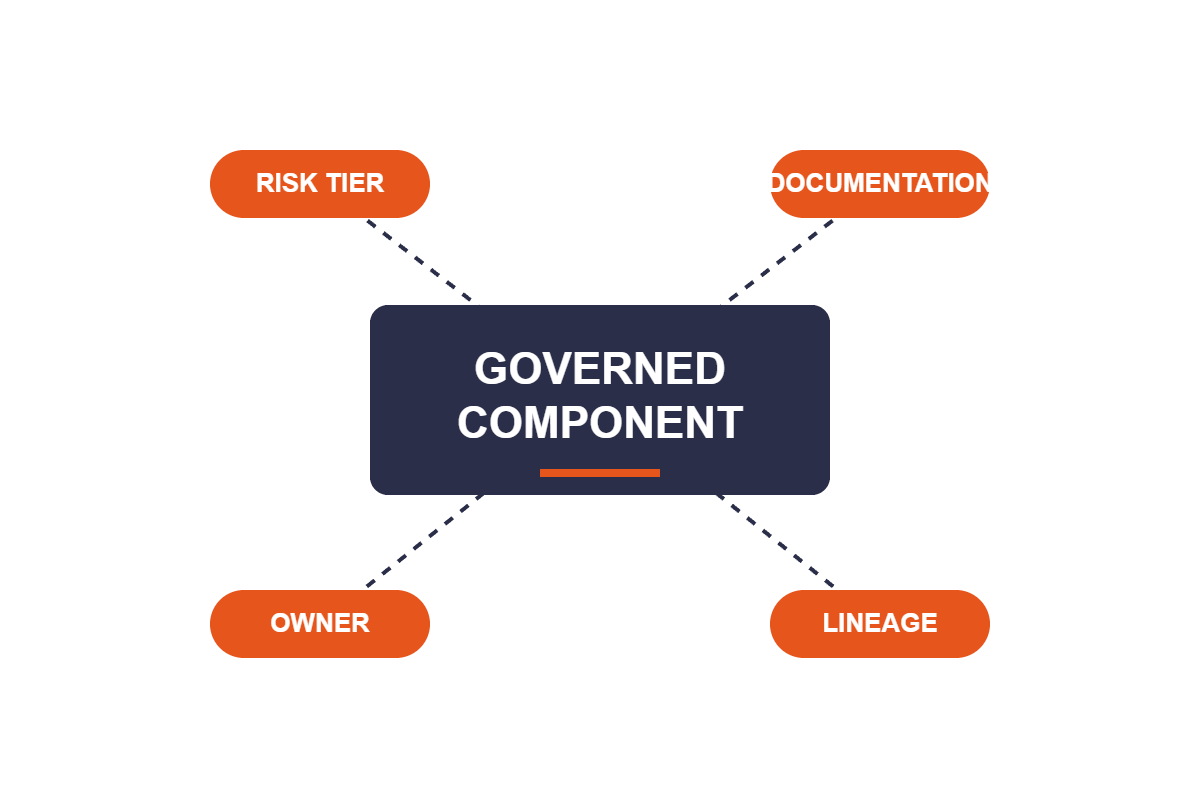
When something goes live here, four things come with it automatically. How risky it is. What it does and how it was built. Who owns it. And a record of the data behind every answer it gives. Nobody writes any of that separately, because the platform writes it while the work is happening.
That is why the list of what is running stays accurate on its own, and why approving the next project stops being an argument.
From an idea to something running in 30 minutes.
Bring in what you already have. The models your teams wrote, your data, and the software you already pay for. Nothing moves out of your cloud.
• Connect your own systems and data
• Register the AI you license from vendors
• Your AI provider, your contract, your keys
• Runs in your cloud, on-premise, or air-gapped
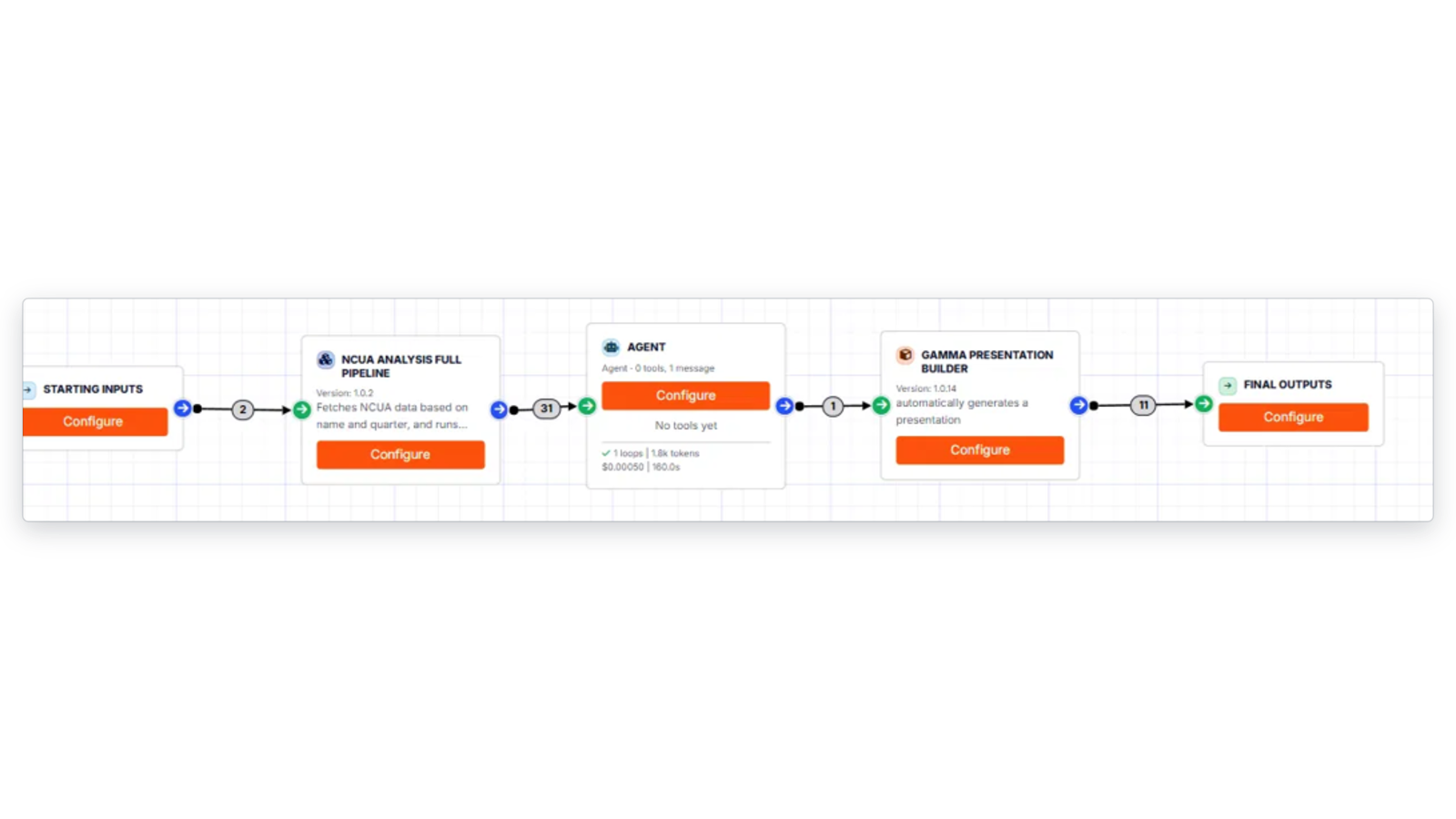
Put the pieces together by dragging steps into place or by writing code. Once your data is connected as a step you can reuse, your team can also just ask for what they need. Point Claude, Copilot, or ChatGPT at gravityAI and ask it to pull from your systems and build the workflow. Most people have never reached their own data this directly. What comes out still lands on the list.
• Describe what you need and get a working workflow
• Drag-and-drop for people who don't code
• Build from the AI assistant your team already uses
• Guardrails, cost caps, and limits by default
Try it against real examples before anyone relies on it. Compare a new version against the one in production and see what changed before you switch over.
• Test against real examples, not in production
• Compare versions side by side on the same inputs
• Update a candidate version and test it at scale first
• Promote it deliberately
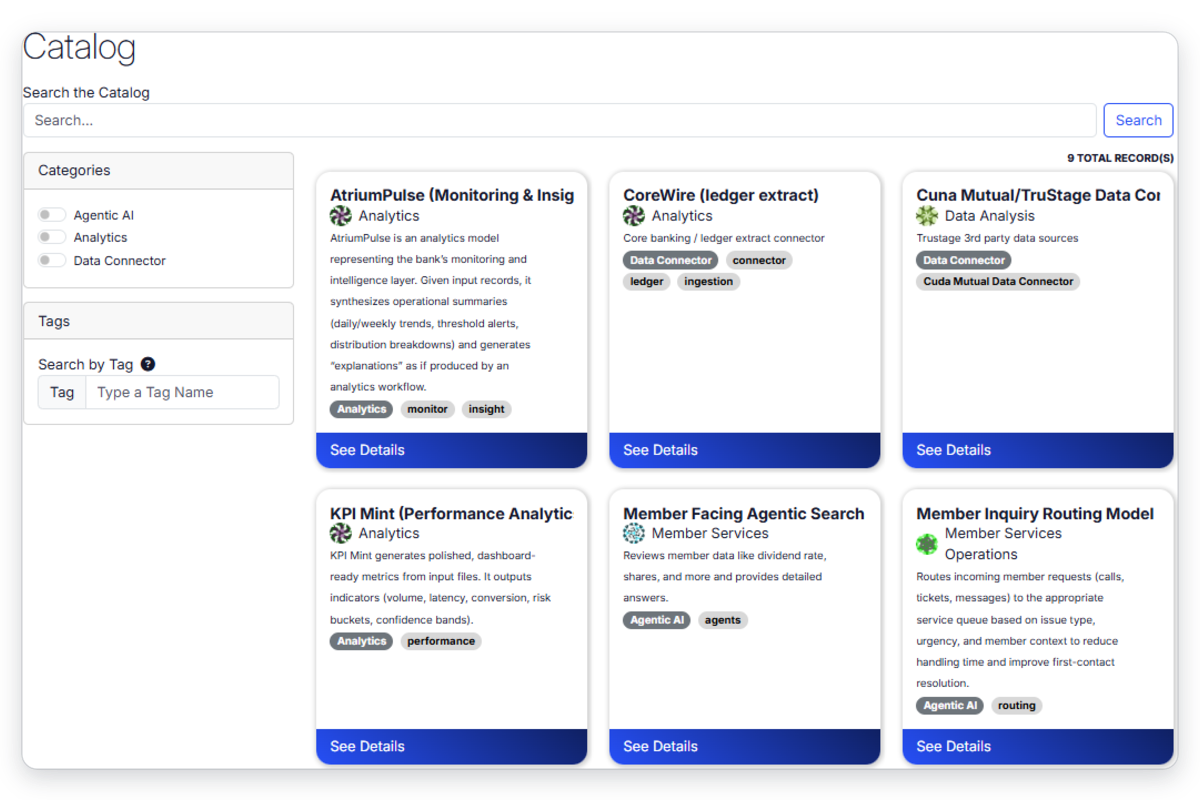
When something works, the next team starts from it instead of starting over, and the record comes with it.
• A shared catalog across the business
• Adapt what already works
• Credit stays with whoever built it
• Version history and rollback
Audit asks four questions
| What they ask | Without a record | On gravityAI |
|---|---|---|
| Which tool made this decision? | Three teams run something similar. Nobody is certain which. | Named, with the date it was registered |
| What data did it use? | It read an extract that has since been overwritten. | The exact source, and the day it was pulled |
| Which version was running that day? | Updated sometime in February. No history kept. | The version, and the dates it was live |
| Who reviewed it before it went live? | No record that anyone signed off. | The reviewer, and when they signed off |
The same four questions take two weeks on one side and an afternoon on the other, and the two-week version still ends in a caveat. Nothing here is extra work your teams have to remember. The record is written while the work happens, which is the only reason it is still there months later.



Where does your organization stand on the AI Maturity Curve?
Take this 5-minute assessment to benchmark your AI maturity across 4 critical dimensions and get a personalized roadmap to accelerate your AI journey.
~5 min · No signup · Instant results
Questions we get
No. gravityAI connects to the systems you already have and makes what gets built on them recorded and reusable.
No. People without a technical background build by dragging steps into place. Engineers work in code on the same pieces.
The record is written while the work happens rather than in a review beforehand, so low-risk work moves without ceremony.
No. You connect your own AI provider under your own contract, and your data stays in your environment.
Yes. Your secure cloud, on-premise, or fully air-gapped.
Thirty minutes with our CEO, no deck. Bring the AI project that has been stuck the longest and we'll walk through what it would take to get it running and recorded.