
Who owns what artificial intelligence creates?
In late August the United States Patent and Trademark Office posed an interesting question to experts in the field of artificial intelligence (AI):
Who owns the patent to inventions created by AI?
According to the public notice published in the Federal Register, the Patent Office was requesting guidance as it considered changes to existing patent laws in order to accommodate “AI inventions.”
As a software engineer of over 20 years I felt it was my duty to weigh in, which I did recently via a detailed email to the Patent Office. In it I argued that AI is simply another tool we use to manipulate existing data and information, not unlike traditional software programs and tools. By that logic, the patent for anything that is created using the tool should belong to those using it to arrive at a unique finished product, rather than the toolmaker.
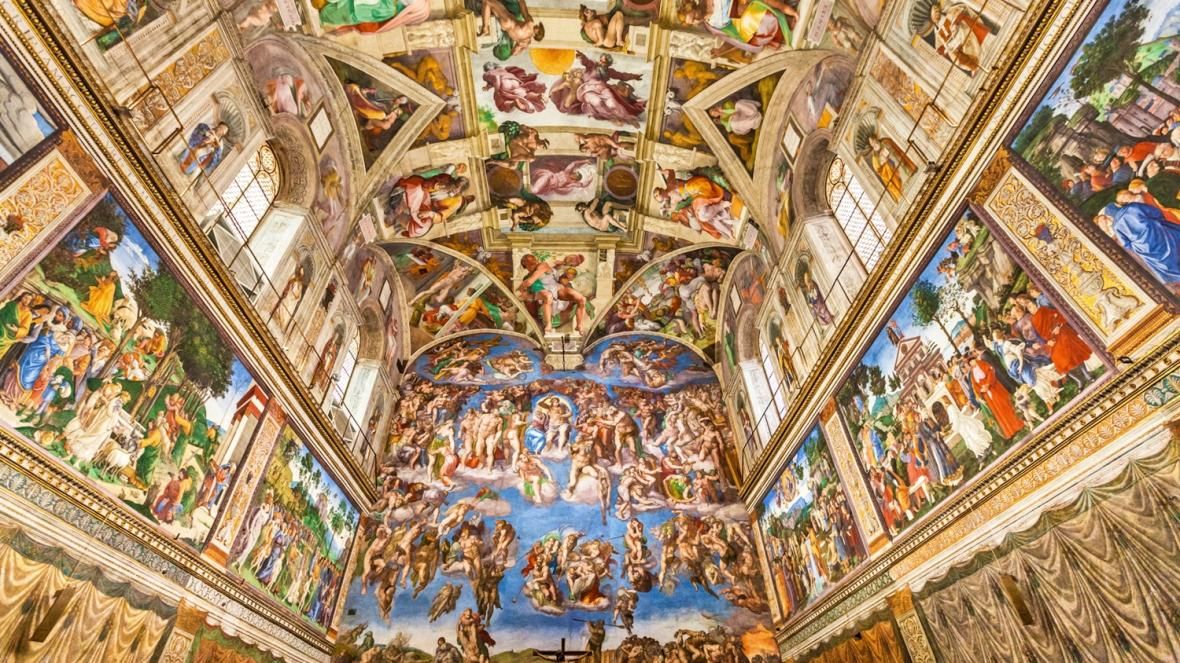
After all, the person who made Michelangelo’s brush doesn’t own the Sistine Chapel, American guitar maker Fender makes no claim to Jimi Hendrix’s music, and Adobe doesn’t own the images that are created using Photoshop.
Sounds simple enough, but unfortunately when it comes to AI and machine learning algorithms, things aren’t always as clear-cut. As outlined by the patent officer’s public notice, “AI methods and systems vary in their technical implementation, but rely on a substantial level of development and training by inventors, developers, and system users.”
AI, in simple terms, is achieved by combining complex mathematical equations with large troves of data. For example, if you wanted to create an AI application that can detect cats in pictures, you would first create a set of mathematical rules that define how it “learns,” and then feed into it thousands or even millions of pictures of cats, until it builds a pattern or “algorithm ”for recognizing felines on its own.
In this example the person that fed the pictures into the AI system might be different than the person who took the pictures, and perhaps a third person or group was responsible for writing the underlying algorithm. As a result, there might be three people or groups who could stake a claim to the AI tool that results.
It gets even more complicated if the images that are fed into the algorithm aren’t licensed for that specific use. In that case, there could be millions of potential contributors to the resulting technology.
To take things even further, consider what happens if that AI tool is combined with other algorithms to create a new product that can detect not only cats, but any animal? And what happens if someone were to then take this new tool and use it to create a camera filter that turns a user’s face into the animal they most resemble; what claim can those who worked on the original cat identifying AI software make to this new product?
I personally believe that the same laws and rules should apply to these sorts of innovations as currently apply to derivative works. Consider what happens when you take a picture of a statue; copyright laws today would state that the sculptor could make no claim to the image. Now imagine taking a picture of a room full of statues: each contributes to the overall image, but according to existing copyright law the photograph itself is considered a unique derivative work, and the photographer is its sole owner. In other words, none of the sculptors can claim ownership of that image.
AI software should be no different. So long as the underlying data is properly licensed for use in training an AI algorithm, the algorithm is nothing more than a derivative work.
So when AI creates something unique based on its combination of data sets and algorithms and instructions, those who captured the data, uploaded it, compiled it and fed it through an algorithm shouldn’t be able to claim it as their own. Only the person who used the tool in such a way—the one who instructed the AI software to produce a unique finished product—should be able to take ownership of it.
That’s the position I take, and the one I hope the patent office decides to adopt. Otherwise there will be many complex layers of ownership to sort through anytime someone uses an existing algorithm to create something unique.