
Ship AI into claims and underwriting. Defend it on demand.
gravityAI turns your models, vendor scores, and workflows into governed components deployed inside your own cloud. Each one is risk-tiered, documented, and traceable to the data and version behind it. When a regulator, a policyholder, or your own audit committee asks how a decision was reached, the answer already exists.
Book a 30-minute diagnostic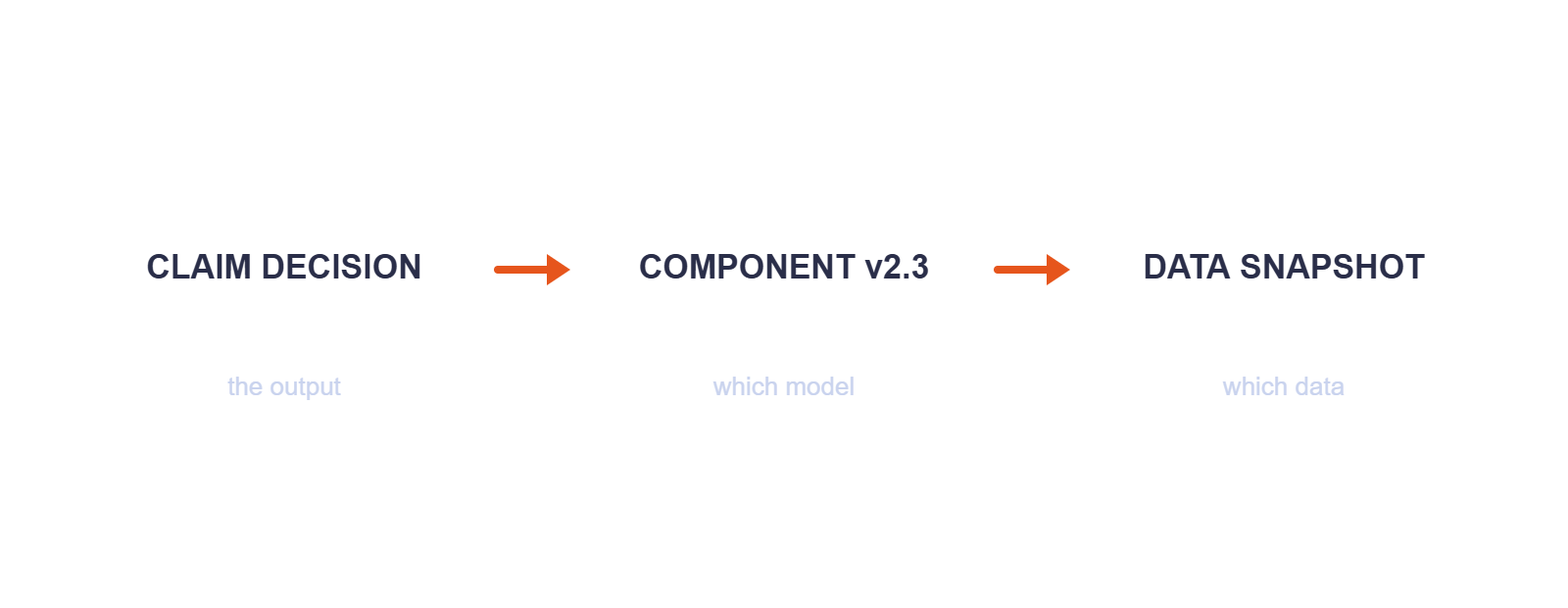
Three ways AI gets ahead of its own paperwork
Carriers rarely have an AI problem. They have an evidence problem.

Governance is a property of the artifact
gravityAI is an AI toolbox and governance platform for regulated firms. Models, data connectors, vendor scores, and agentic workflows become governed microservices, deployed inside your own cloud.
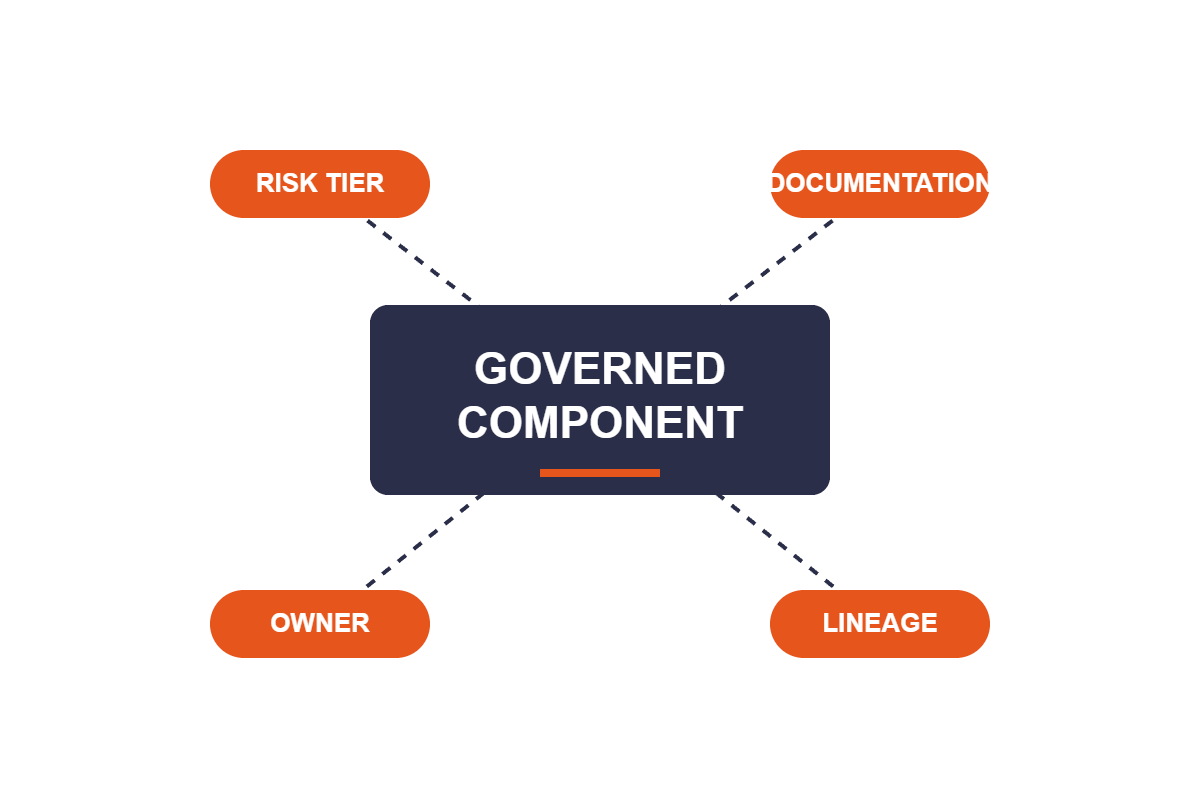
Risk tier, documentation, ownership, access, and lineage travel with the component from the moment it is deployed. Using the platform produces a documented artifact every time, by construction.
A model bought from a vendor gets registered the same way a model built in-house does. Your inventory covers what you licensed as well as what you wrote.
What governed actually means
| Control | How it works | Why it matters |
|---|---|---|
| Inventory | Every model, connector, vendor score, and workflow registered as a deployed component | One list covers in-house and third-party AI, which is the list an examiner asks for |
| Risk tiering | A risk level assigned to each component at deploy time | A claims summarizer and a rating model stop moving through the same approval queue |
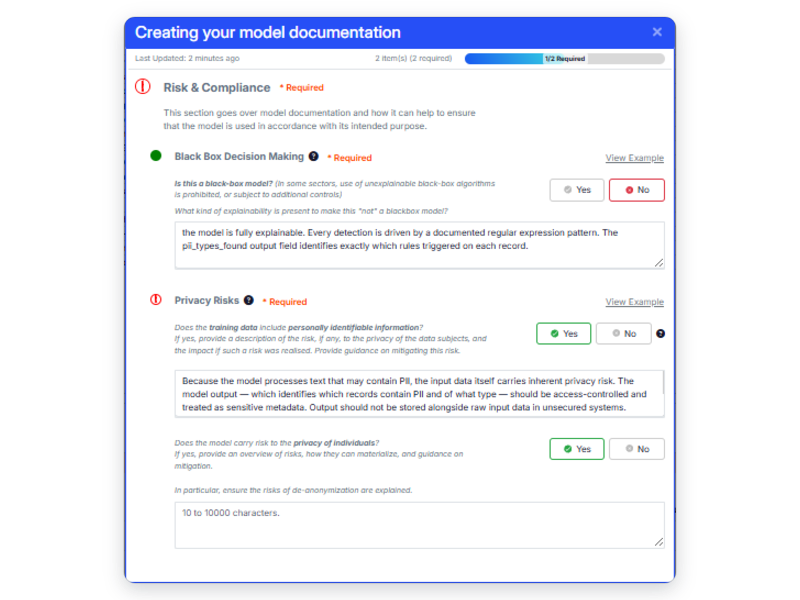
| Documentation | Business context, implementation detail, and risk assessment generated alongside the artifact | Model documentation exists before the exam notice arrives |
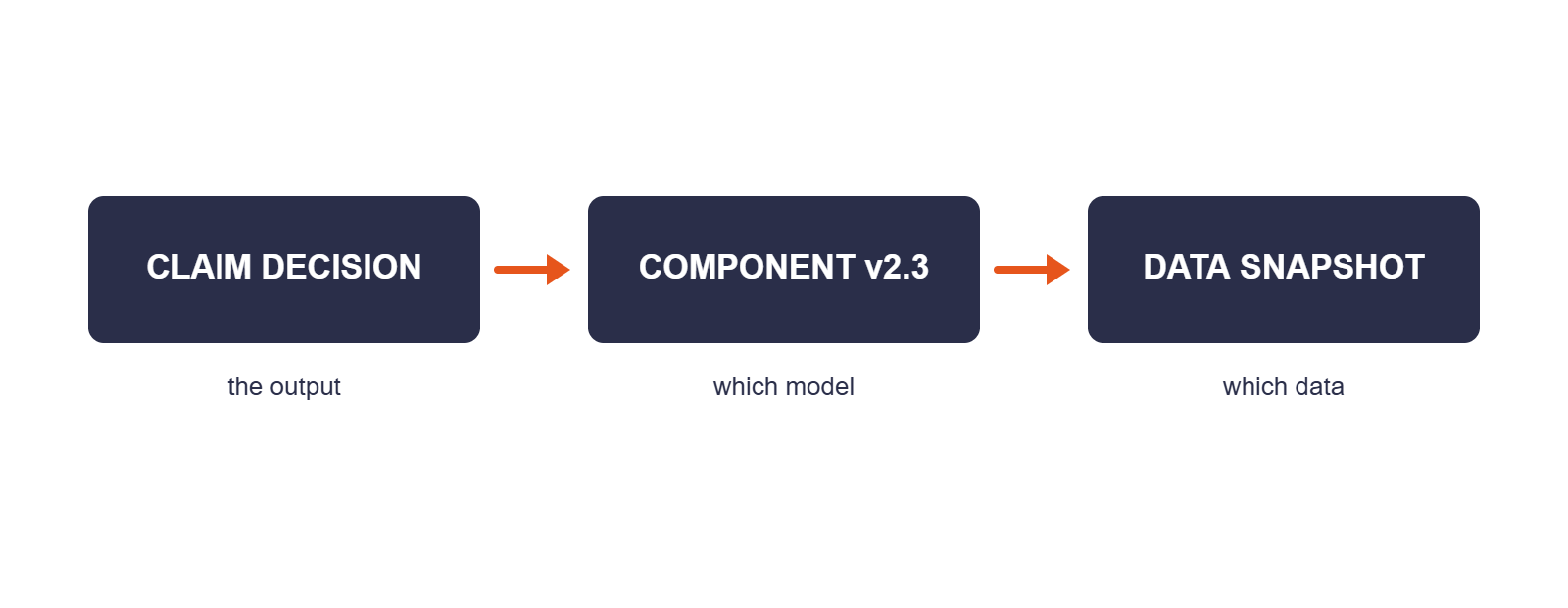
| Lineage | Each output traces to the component, data source, and version that produced it | A single claim or policy decision can be reconstructed on request |
| Third-party models | Vendor models registered, tiered, and monitored as first-class components | Accountability for a licensed model sits where the regulator already puts it |
| Access control | Role-based access to components and the data beneath them | Line-of-business data boundaries hold while discovery stays open |
| Deployment location | Your cloud, on-prem, or air-gapped | Policyholder data stays inside your perimeter |
Governance applied to the artifact is a control. Governance applied to a process is a policy. Only one of them survives contact with a deadline.
From one team's model to a governed enterprise component
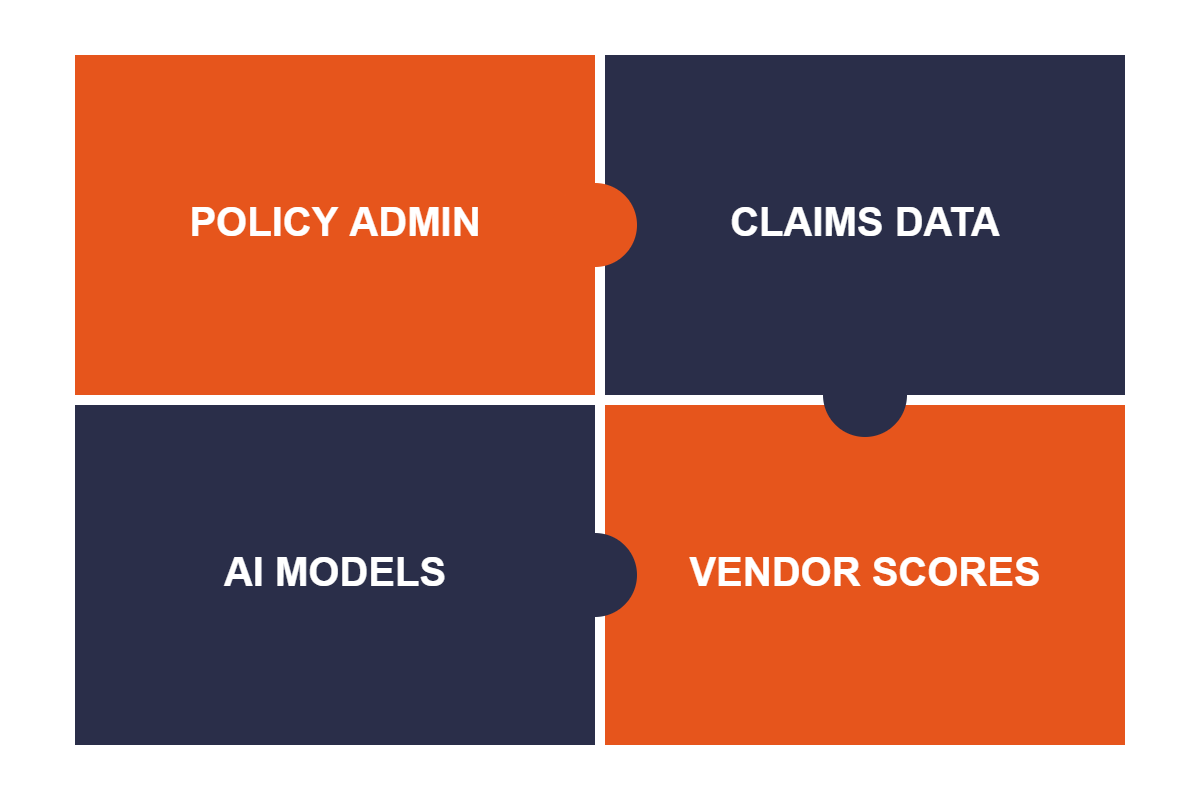
Bring what you already have. Policy administration and claims systems, document stores, rating and reference data, vendor scoring APIs, and your own LLM provider, connected once and available to everyone cleared for them.
• Upload existing Python and actuarial models
• API connectors for core systems and third-party data
• Your LLM provider, your keys, your contract
• Runs in your VPC, on-prem, or air-gapped
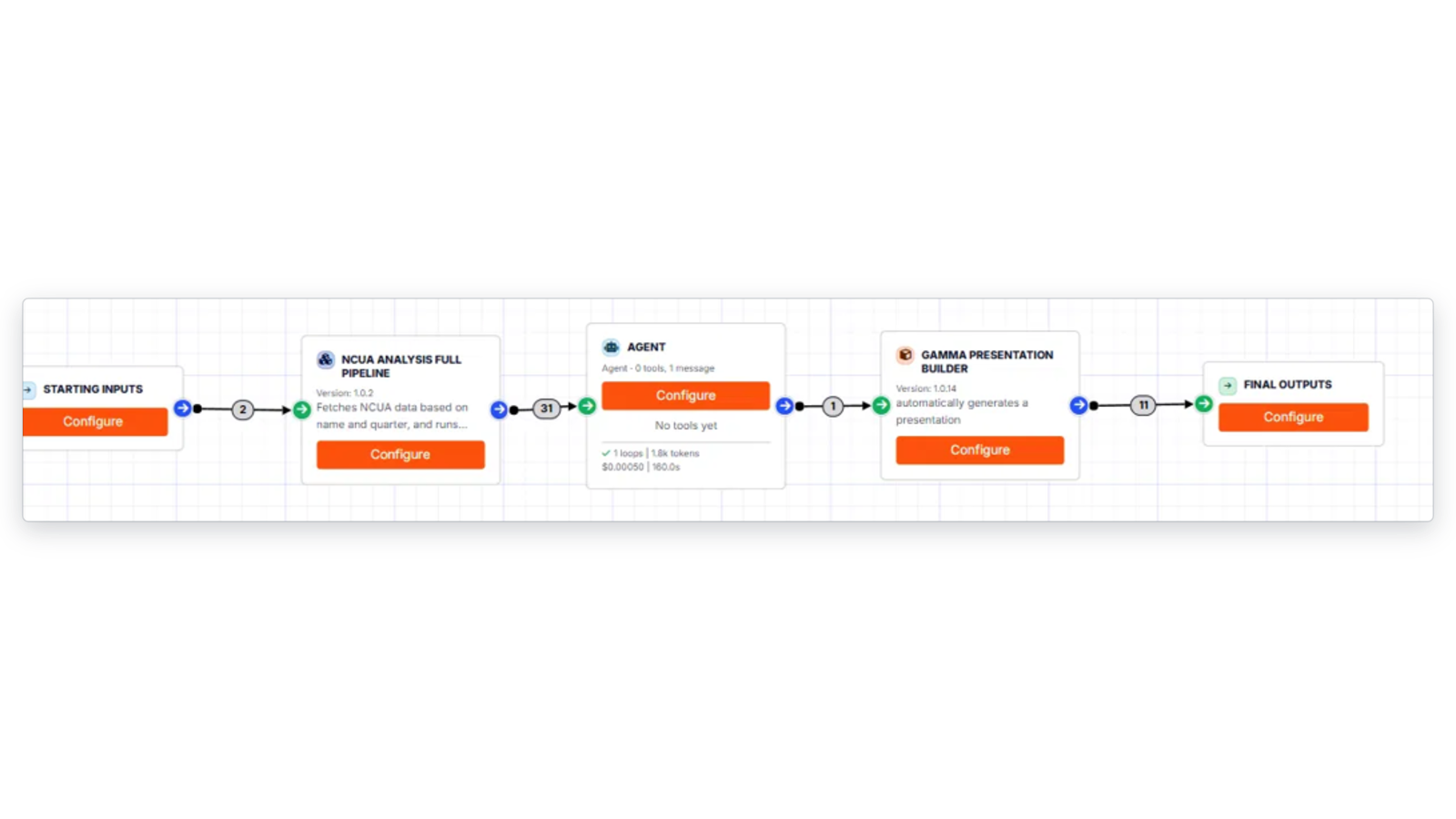
Assemble components into decision workflows. Claims and underwriting teams build in the no-code canvas. Data scientists and actuaries drop into the API and extend the same components in code. Same building blocks, two front doors.
• Drag-and-drop agentic workflow builder
• Full API and code path for technical users
• Chain models, connectors, and LLM steps
• Human-in-the-loop checkpoints where a decision affects a policyholder
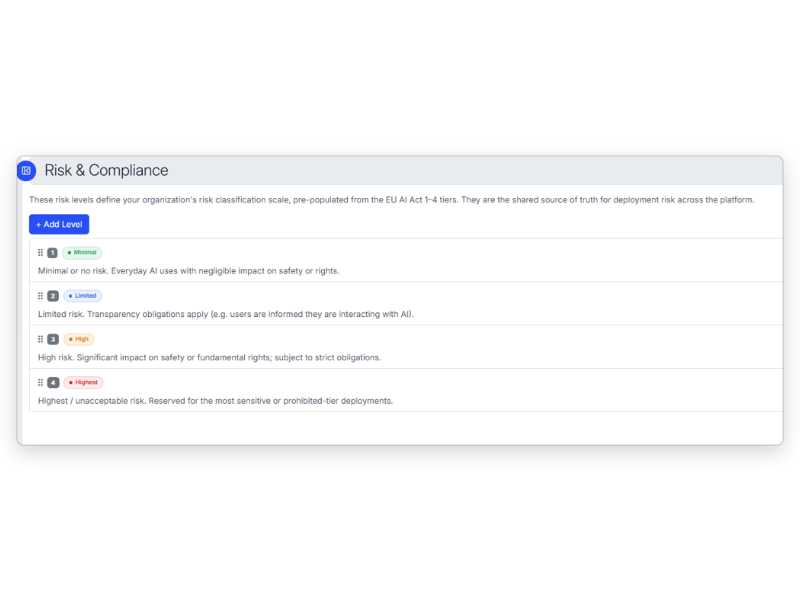
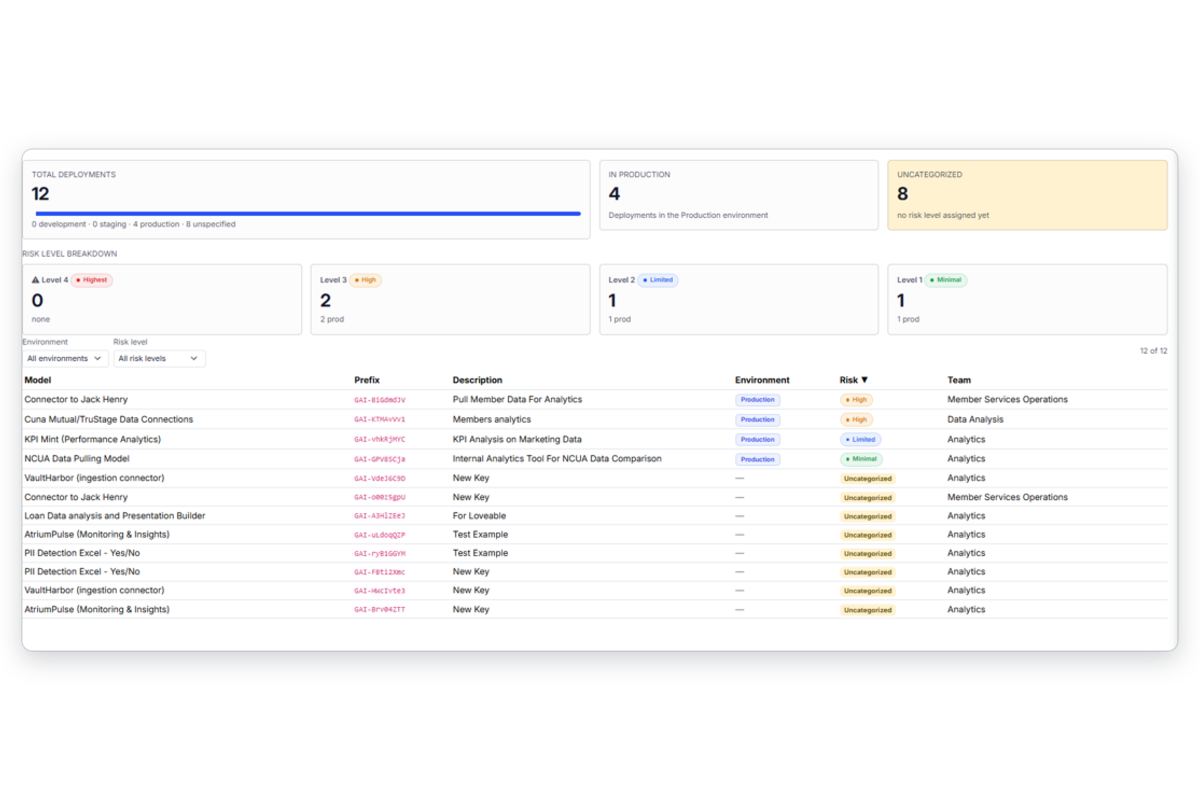
Every component carries a risk level and its own documentation, generated as it is built. Every deployment across every line of business shows up in one dashboard, including the vendor models and the ones nobody registered.
• Risk tier assigned per component
• Business, implementation, and risk documentation generated with the artifact
• Single dashboard across every deployment and line of business
• Access control, audit trail, and lineage by default
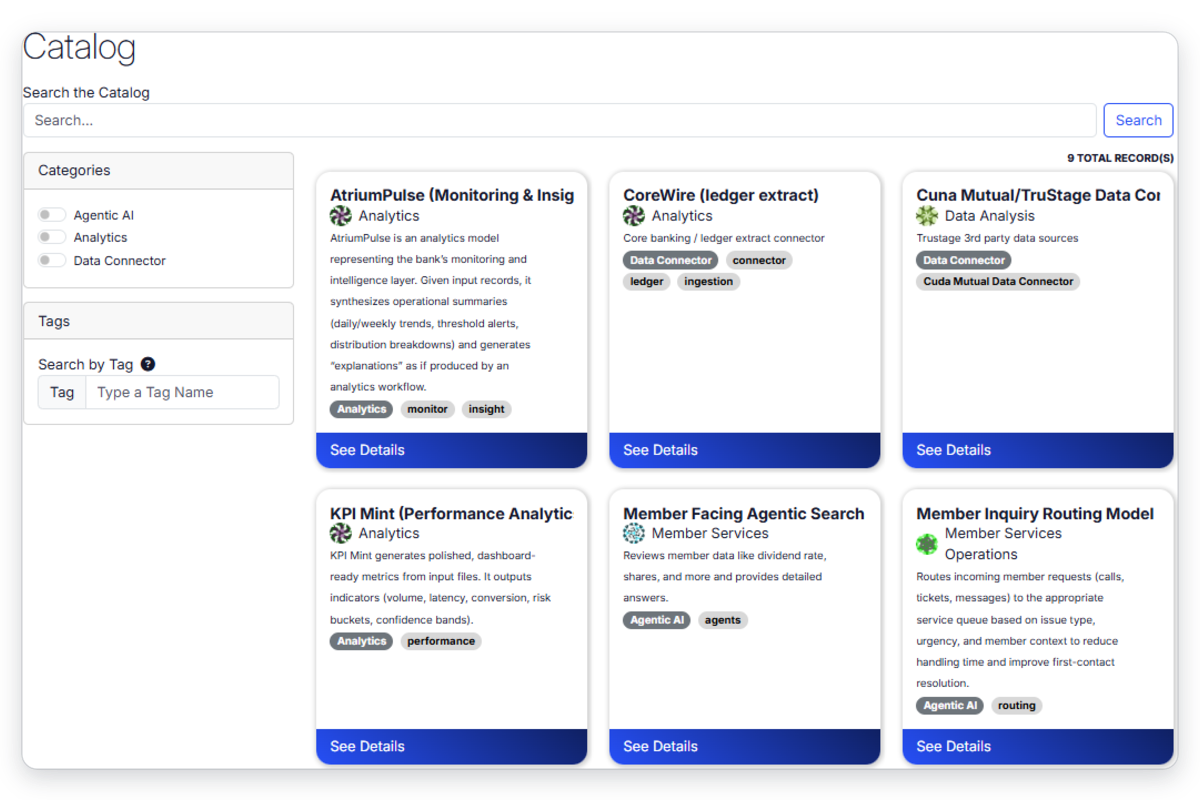
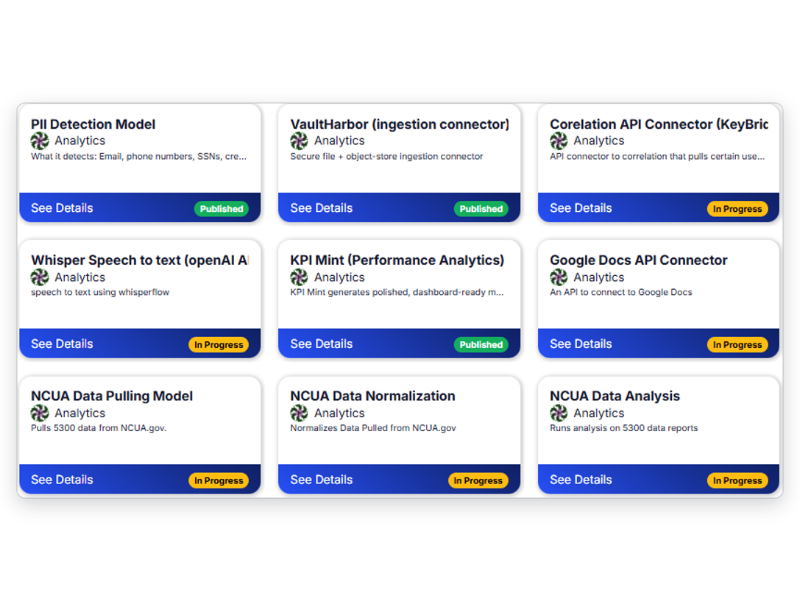
Publish to an internal catalog. The auto team's fraud referral model becomes the property team's starting point, with its assumptions, documentation, and lineage attached. The second line of business inherits the reasoning along with the code.
• Internal catalog of models, workflows, and connectors
• Fork and adapt an existing component
• Usage attributed to the creator
• Versioning and rollback
One platform, three teams who never share a roadmap
The data science or actuarial lead
Publish work as a governed service other lines can use
Find prior work before starting from scratch
A defined path to production that runs without a ticket queue
Your code, your libraries, your standards
The claims or underwriting leader
Compose workflows without writing code
Adapt a model another line of business already validated
Live data from core systems you already trust
Keep a human in the loop where the decision touches a policyholder
The chief risk or compliance officer
Every deployed model, in-house and vendor, in one view
Risk tiering applied at deploy time
Documentation and lineage that exist because the platform made them
Everything stays inside your cloud
Where carriers start
Patterns insurance teams build with governed components.
Build it, bolt it on, or deploy it governed
| Feature | Build in-house | Workflow tool plus governance overlay | gravityAI |
|---|---|---|---|
| Governance attached to the deployed artifact | — | — | ✓ |
| Lineage from a single decision back to code and data version | — | — | ✓ |
| Third-party and vendor models in the same inventory | — | — | ✓ |
| Runs inside your own cloud | ✓ | — | ✓ |
| No-code and code paths on the same components | — | — | ✓ |
| Documentation generated with the model | — | — | ✓ |
| Live without a multi-quarter build | — | ✓ | ✓ |
Questions we get from carriers
Because the models under that governance are a shrinking share of the AI in the building. Rating and reserving models have decades of discipline around them. Extraction, summarization, triage, and routing components usually sit outside that perimeter, and they are the ones multiplying. gravityAI extends one inventory and one risk framework across all of it.
Every deployed component carries generated documentation and lineage from output back to source, so the decision record for a specific claim or policy can be assembled from what the platform already captured.
They register as governed components alongside your own, with a risk tier, an owner, and access controls. Accountability for a licensed model already sits with you, and this puts it in the same inventory as everything else.
Yes. gravityAI runs in your secure cloud, on-premise, or air-gapped. Models and policyholder data stay inside your perimeter, and deployments inherit your existing access controls.
No. It sits on top of them. gravityAI connects to the core systems, warehouse, and vendor APIs you already have, and makes what gets built on them governable and reusable.
No. You connect your own LLM provider under your own contract, and your data and models stay in your environment.