
Let advisors use AI. Keep the record.
gravityAI turns the models, connectors, and workflows behind advisor-facing tools into governed components deployed inside your own cloud. Each one carries its risk tier, its documentation, and lineage back to the data and version behind it, so what an advisor sees and what supervision can reconstruct stay the same thing. Built for home-office teams at broker-dealers, RIA platforms, and wirehouses.
Book a 30-minute diagnostic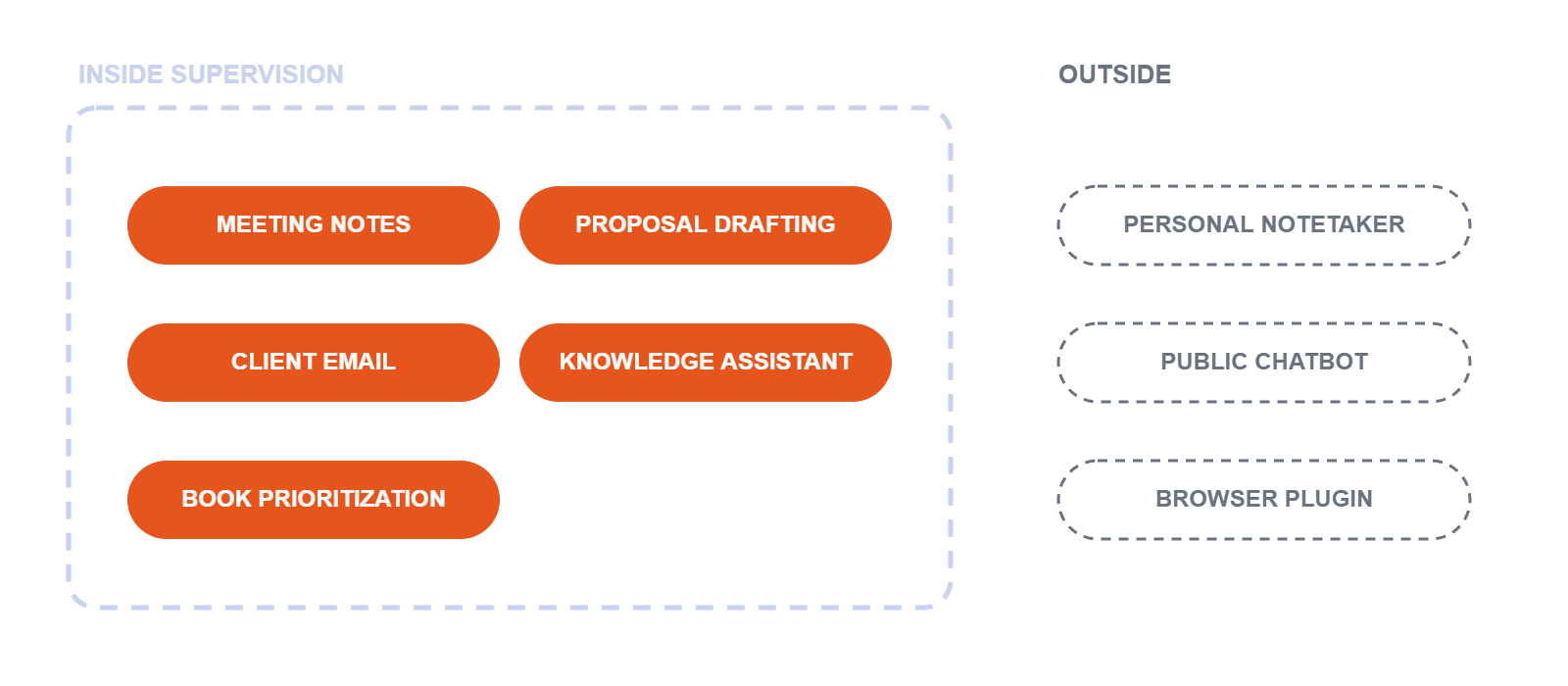
Your AI policy is a memo. Your advisors have a subscription.
In wealth management, AI arrives through the field rather than through the platform team.

Governance is a property of the artifact
gravityAI is an AI toolbox and governance platform for regulated firms. Models, data connectors, and advisor-facing workflows become governed microservices, deployed inside your own cloud.
Risk tier, documentation, ownership, access, review checkpoints, and lineage travel with the component from the moment it is deployed. Using the platform produces a documented artifact every time, by construction.
The tool an advisor opens and the record supervision reviews come from the same component. That is what makes a client communication reconstructable months later.
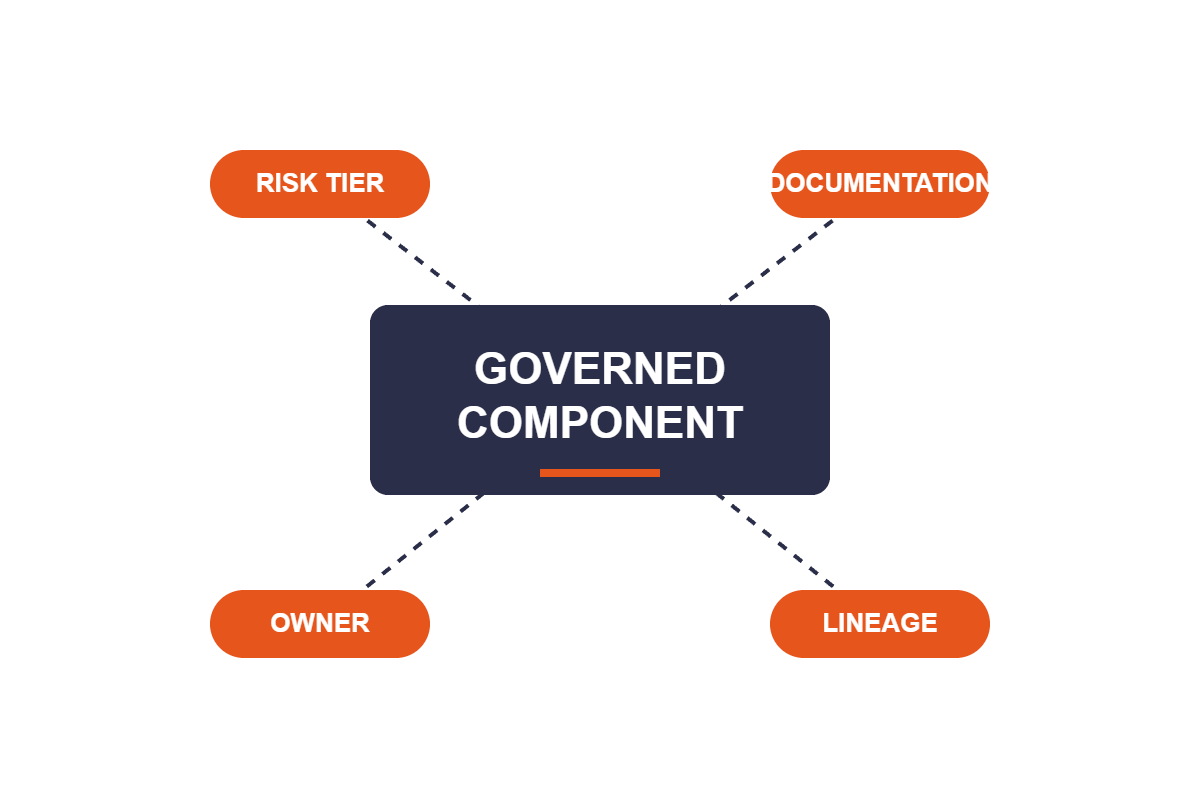
What governed actually means
| Control | How it works | Why it matters |
|---|---|---|
| Inventory | Every model, connector, and advisor-facing workflow registered as a deployed component | The inventory covers the tools that reach clients, not only the models in the back office |
| Risk tiering | A risk level assigned to each component at deploy time | A meeting notetaker and a recommendation engine stop sharing one approval path |
| Review checkpoints | Human-in-the-loop steps placed wherever output reaches a client | Nothing reaches a client unreviewed unless you decide it should |
| Documentation | Business context, implementation detail, and risk assessment generated alongside the artifact | The review file exists before compliance asks for it |
| Lineage | Each output traces to the component, data source, and version that produced it | A specific client communication can be reconstructed on request |
| Access control | Role-based access to components and the data beneath them | Client data boundaries hold across channels, regions, and affiliations |
| Deployment location | Your cloud, on-prem, or air-gapped | Client data stays inside your perimeter |
Governance applied to the artifact is a control. Governance applied to a process is a policy. Only one of them survives contact with a deadline.
From an unsanctioned tool to a supervised capability
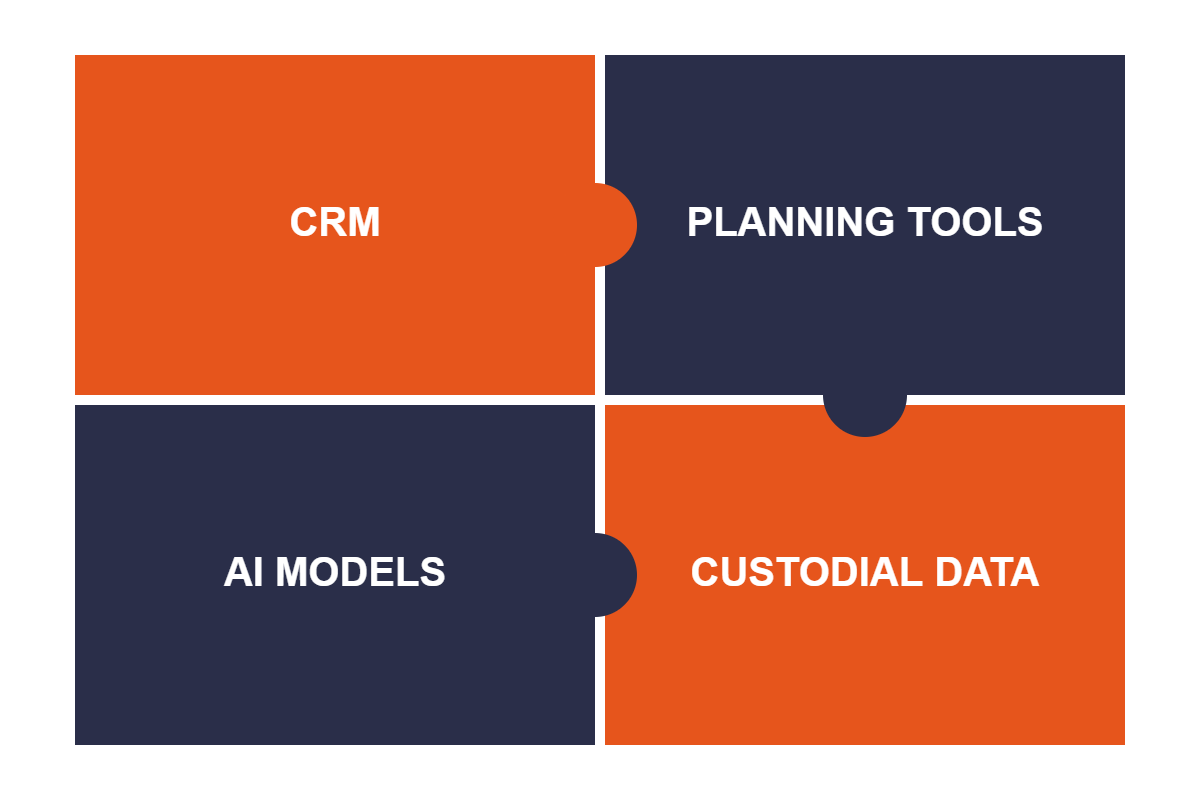
Bring what the field already runs on. CRM, planning tools, custodial and market data, your approved content library, and your own LLM provider, connected once and available to everyone cleared for them.
• Connect CRM, planning, and custodial systems
• Point components at approved firm content
• Your LLM provider, your keys, your contract
• Runs in your VPC, on-prem, or air-gapped
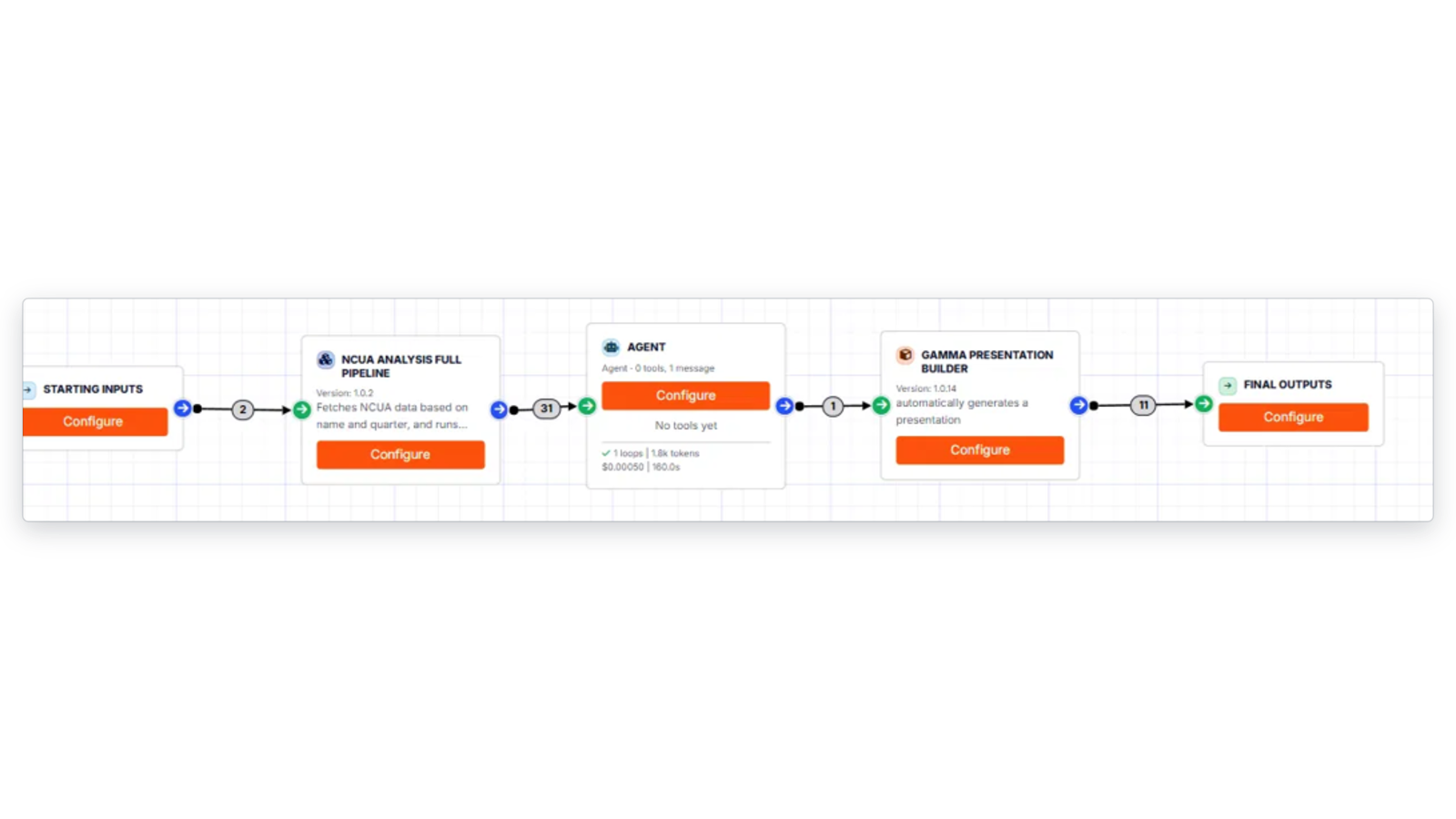
Assemble components into advisor-facing workflows. Home office teams build in the no-code canvas, compliance places the review checkpoints, and technical staff extend the same components through the API.
• Drag-and-drop agentic workflow builder
• Review checkpoints wherever output reaches a client
• Chain models, connectors, and LLM steps
• Full API and code path when you have the staff for it
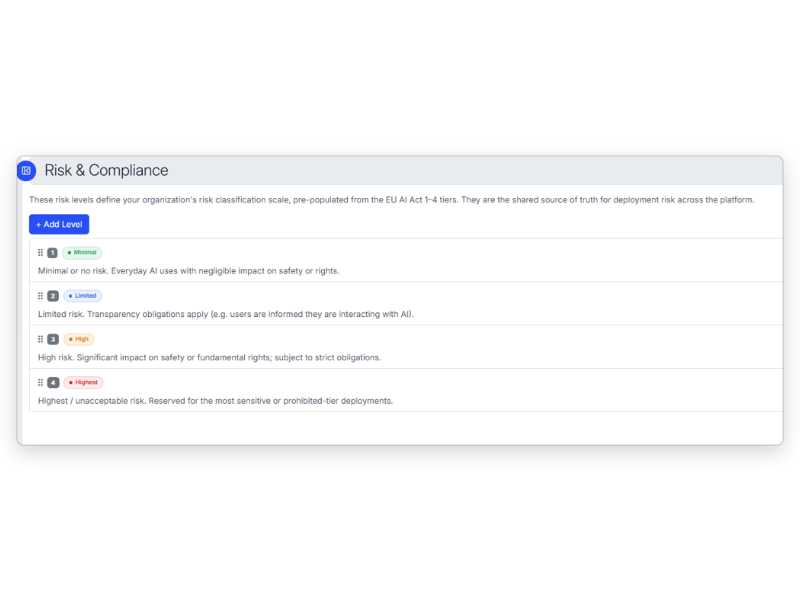
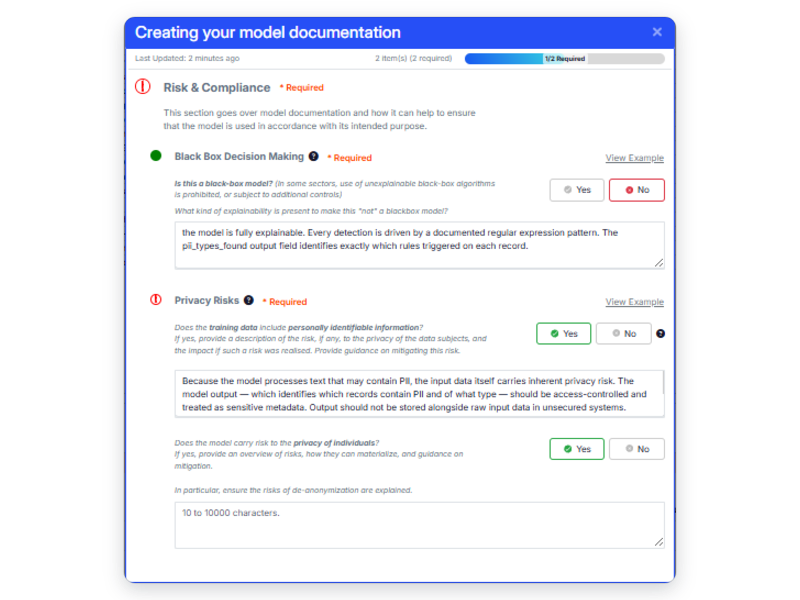
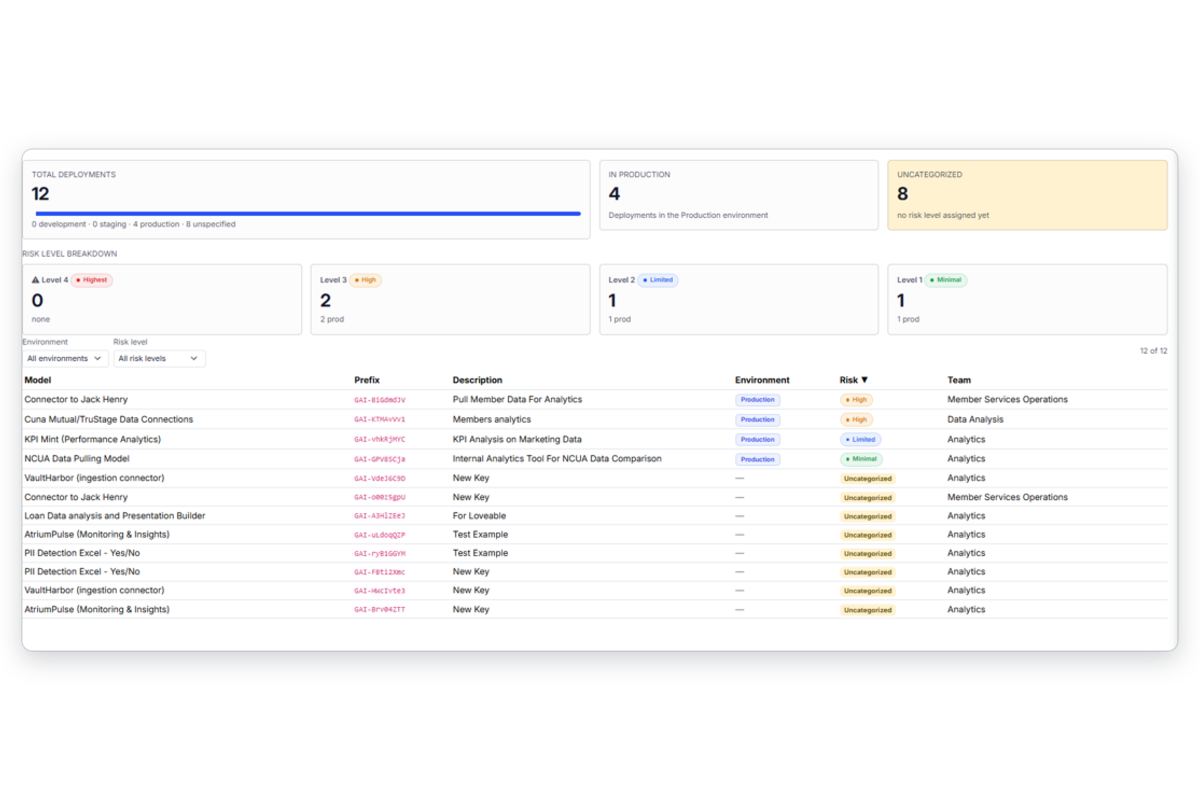
Every component carries a risk level and its own documentation, generated as it is built. Every deployment shows up in one dashboard, including the advisor-facing tools that never looked like models.
• Risk tier assigned per component
• Business, implementation, and risk documentation generated with the artifact
• Single dashboard across every deployment
• Access control, audit trail, and lineage by default
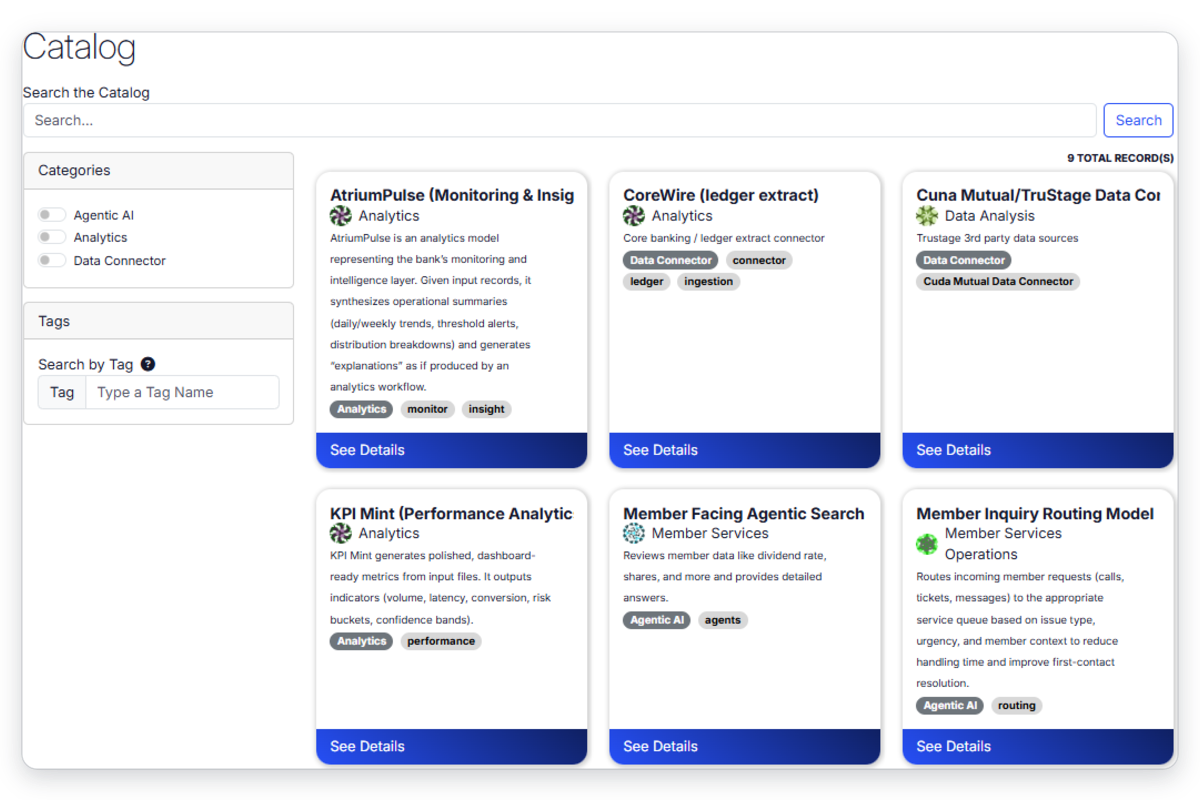
Release to the field on your terms. Pilot with one office or one region, watch how it performs, version it, and extend when it earns the wider audience. Roll a component back without pulling the whole capability.
• Pilot with a group before the full field
• Versioning and rollback per component
• Consistent output quality across every advisor
• Retire or replace a component without a rebuild
One platform, three teams with different definitions of risk
The Chief Compliance Officer
Every AI tool touching client data or client communications in one inventory
Risk tiering applied at deploy time
Documentation and lineage that exist because the platform made them
A reconstructable record behind a specific client communication
The head of advisor technology
Deliver approved AI capability instead of chasing unapproved tools
Connect the CRM, planning, custodial, and market data advisors already use
Your LLM provider, your keys, your contract
One place to version, roll back, and retire what you shipped
The field enablement leader
Give advisors something better than what they found on their own
Consistent output quality across the whole field
Keep a human in the loop wherever the client sees the result
Pilot with one group before the firm
Where wealth firms start
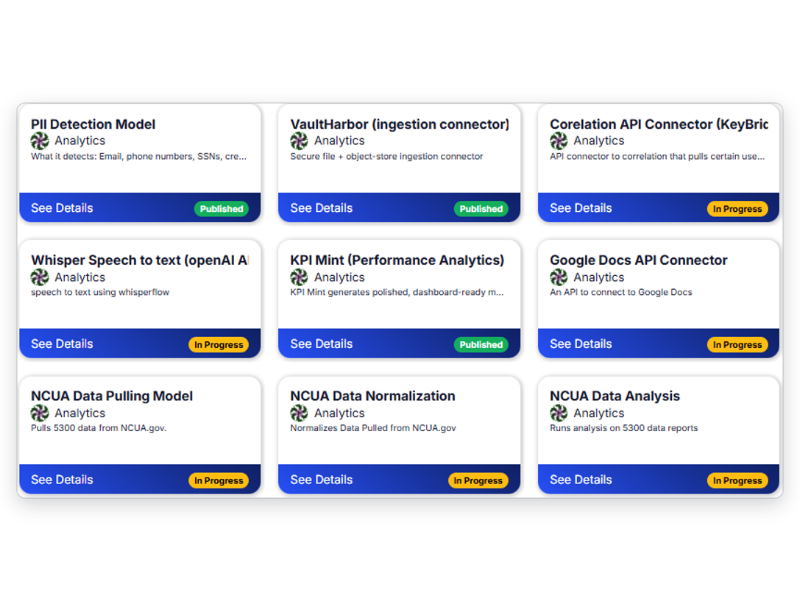
Patterns home-office teams build with governed components.
Build it, bolt it on, or deploy it governed
| Feature | Build in-house | Point solution per use case | gravityAI |
|---|---|---|---|
| Governance attached to the deployed artifact | — | — | ✓ |
| Lineage from a client communication back to source | — | — | ✓ |
| Review checkpoints before output reaches a client | — | ✓ | ✓ |
| Advisor-facing tools in the same inventory as back-office models | — | — | ✓ |
| Versioning and rollback across the field | — | — | ✓ |
| Runs inside your own cloud | ✓ | — | ✓ |
| Live without a multi-quarter build | — | ✓ | ✓ |
Questions we get from wealth management firms
It gives them a sanctioned version of the same capability, connected to firm data, running inside your environment, with the record supervision needs. Restriction alone tends to move the behavior rather than stop it. The practical path is offering something better than what they found on their own and putting it where you can see it.
Every component carries generated documentation and lineage from output back to source, so a specific client communication can be traced to the component, the data, and the version that produced it. It feeds the supervisory system you already run rather than replacing it.
No. It sits on top of them. gravityAI connects to the CRM, planning tools, custodial feeds, and market data you already have, and makes what gets built on them governable and reusable.
Yes. Non-technical users build in the no-code interface, and technical users work through the API when you have them. This is the audience the no-code path was designed for.
Deployment reaches whoever you grant access to, and access control and audit trail follow the component. What the platform cannot solve is a tool the firm never sanctioned, which is exactly why the sanctioned version has to be good enough that advisors prefer it.
No. You connect your own LLM provider under your own contract, and your client data and models stay in your environment.